Thursday, December 22, 2022
As of 2025, please go to stuff.davidaugust.com, my newer blog. See you there!
Lights Out
ephemeral nature of our work
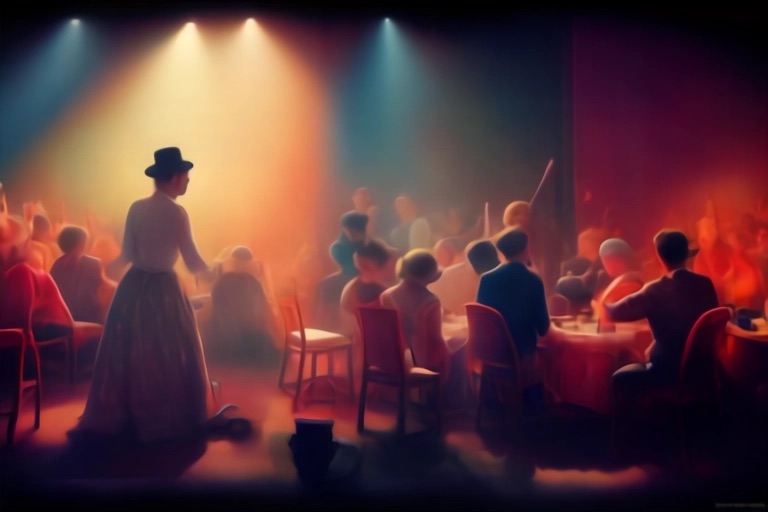
I imagine these same questions are what the Twitter alums are dealing with right now. It will be difficult for them, too. But this [company closing and turning off all the servers] is a necessary step in the career for anyone who wants to arrange electrons for a living. Because the things we make, the ways we express our creativity, none of it is tangible. It can all go away with the press of a button. And we have to face that part of the bargain with our eyes open. Making something lasting of our lives is difficult, and very few of us will ever do it. But making something lasting with electrons? It might be damn near impossible.
(from When the Lights Go Out).
Projects fall apart. We hate it when they do, but they do sometimes. Blue Sky is a movie made in 1991 that spent 3 years in a vault after the production company Orion's bankruptcy. Then, Jessica Lang won an Academy Award for her work in it after it was later released. There is a story I've not been able to confirm that Brad Pitt, before Thelma & Louise, was in a movie that was going to be his star-making turn, and the footage was lost in the scramble to evacuate from Yugoslavia as it descended into war.
But less dramatically, sometimes funding falls out. Sometimes people withdraw, sometimes any number of things make a project stop, dead in its tracks. The lights go out.
What are we to do as actors, how are we to seek any sort of meaning, will our work even be remembered?
Even highly established actors may not be widely known in a generation. I once heard a story of a teacher in the 21st Century marveling that their students didn't know who James Cagney, Marlene Dietrich and other major 20th Century stars were. Their students simply hadn't been exposed to work by some titans of the industry, people who helped define what film is.
So what are we to do? If every project we are in can go into turnaround or stall out entirely at any time, and if our work can be forgettable in decades (or in the case of most films from the silent era, lost entirely), how do we cope?
How do we handle knowing our work is fleeting? We try to embrace it.
Life is fleeting. Don't stop reading worried I'm going into some woo woo jag, or worry I only mean "all we have is now." While life, and our work, does happen in the now, it changes everything. Everything. Our work changes everything.
The American people have spent more on entertainment than they do on food for over ten years now. More money than being nourished physically is being spent on nourishing our hearts and minds (with some distraction thrown in there too). People are arguing about media and entertainment's role in civilization as before, only now more loudly since the internet lets people's anger and joy find audiences like no generation ever before.
From the time when we all lived in caves and told stories around the fire at night, and someone stood up and acted out a sequence, we have needed entertainment. We have needed storytelling. We need it like we need air.
Not only is a whole hemisphere of our brains seemingly built to make narratives out of our experiences, but whole countries need stories to understand and invent who they are, their identities. A people need to have a story of how they are a group, and a person needs a story of who they are and how they're living.
We risk collapsing all of this into solipsism, saying that our mind is all that we can be sure exists. But story, the narratives of our lives, are central to how we do what we do, and how we understand the world. And actors are assistant storytellers.
My occupation is assistant storyteller. It is not "icon."
- Harrison Ford
So maybe it is perfectly fine if in a few decades strangers don't remember us. We still help tell the stories, we still touch the lives of those we know, meet, work with and love. If we make some great work, really truly great stuff, and if the world doesn't end up noticing, it hurts. It does.
It is not fun to do amazing things and have that stuff go away and seem like it never happened. But that's the thing. Since an early human acted out a story around the fire, an actor's work has been fleeting. For centuries, live performance was all there was. It was gone when the curtain fell, save for the hearts and minds it touched.
There could be paintings or sketches of an actor's work, but the performance itself: vanished.
Then photographs could capture fractions of a second of our work more accurately. Finally, film could hold the performance over time. Then something interesting started to happen: everyone could think something can be forever.
But maybe even then we're missing something, risking solipsism again. The performance never had substance in a tangible way to begin with. The film is not us, it is a representation of us. A reflection or sorts. Sure, films made today can be preserved and seen by people not yet born. Time shifting is compelling, but our selves, our bodies and minds aren't on that celluloid or in that binary data stored on a chip.
We can go further. The live stage performances didn't put us actually into the audience so much as move their hearts and minds. The early human acting around the fire did the same. We have always been touching the minds and hearts of the audience. That's the work.
Commerce and technology make it seem like our lives and the lives of those generations of pre-film actors are fundamentally different. Our need to light things well for a self-tape audition, so we can capture and digitize our image and voice, and then send them off to far places, makes it easy to think we're different than other epoch's actors. It seems like we're different than other epoch's humans.
But here's the permanence of it, here's the everlasting part of our work. It's not the disk drives, or the database entries that hold our work, that give our work substance. It's not the reviews and moldering stage costumes in theatres around the world that make our work real and impacting. It is the fact humans are the only part of the physical universe we know of that are conscious of themselves and we, actors, tell that part of the universe's stories.
You are something the whole universe is doing in the same way that a wave is something that the whole ocean is doing.
- Alan Watts
If you think being a wave means having no impact, just ask anyone who's experienced an undertow, or been in a city that's faced a storm surge.
Actors absolutely have substance and our impact echoes through the ages.
Actors used to be buried at a crossroads with a stake through the heart. Those people's performances so troubled the onlookers that they feared their ghosts. An awesome compliment.
- David Mamet
Our power and lasting permanence is in our ethereal and unbounded possibilities.
One only needs to read Ozymandias by Percy Bysshe Shelley to start to grasp the folly of fixating on permanence:
I met a traveller from an antique land,
Who said—"Two vast and trunkless legs of stone
Stand in the desert. . . . Near them, on the sand
Half sunk a shattered visage lies, whose frown
And wrinkled lip, and sneer of cold command,
Tell that its sculptor well those passions read
Which yet survive, stamped on these lifeless things,
The hand that mocked them, and the heart that fed;
And on the pedestal, these words appear:
My name is Ozymandias, King of Kings;
Look on my Works, ye Mighty, and despair!
Nothing beside remains. Round the decay
Of that colossal Wreck, boundless and bare
The lone and level sands stretch far away."
Our work may be fleeting, even if the technology of film and TV lets it last for decades or centuries. But the hearts and minds we move, and the way those people then change the world, those things will ripple on through to the end of time. And that is the un-substantive substance of our work.
Like lighting in a bottle, an actors work cannot be held: it is intangible. That's sometimes scary, and hard to get our minds around. Especially when we've bills to pay. That's partly why acting takes more than our minds to do. It's why getting in our heads alone usually doesn't get the scene or the moment the life it really needs. We are the squishy, and that's more than ok, it's good.
People talk about content often using that word in part to try to put a handle on something that cannot be contained. Sure, cat videos are content too, but at its most moving: our work is meant to be hard to hold in our hands, our minds and hearts.
It is part of why accidental behavior caught on film is often so compelling. Which is why having the illusion of the first time and being in the moment can be so vital. It is part of why facing uncertainty with courage is often something good acting (immediate, authentic, interesting and fun) has as part of it.
So between action and cut, or curtain up and curtain down, amid fake danger, courage and life is the order of the day.
Let the realm of paying our bills, grocery shopping and other concrete things get our attention when we seek the tangible, purely physical and logistic. But when we're acting, let yourself fly.
And if you want help flying, I'd love to work with you. I'll use this corpuscle of the physical, tangible and concrete to button up this post: my acting coaching website, that I put together in like five minutes when a friend asked if I had one, is here: about.me/davidaugust
Labels: acting, film, inspiration, money, process
this posted by David August at 1:54 PM - 0 comments - 

Tuesday, November 02, 2021
As of 2025, please go to stuff.davidaugust.com, my newer blog. See you there!
Individuals Investing in Film
Back in about 2015, the SEC started to allow small investors to invest in public offerings (regulation crowdfunding), to invest in and own small pieces of things. The possibility for individuals who had not previously invested in films began to change, and now it seems to be getting people's attention more broadly:
The Fresh Kills offering is structured so that Upstream investors will be at the front of the line should the movie make money and receive a 110 percent payout on their investment before other shareholders in the film receive any dividends or returns. After the payout, the investors’ preferred shares will convert to common shares representing 25 percent of the copyright in the company/film. The remaining 75 percent will be owned by Horizon
(from AFM: Why Indie Filmmakers Are Betting on NFTs).
NFTs are often lumped in with cryptocurrencies in general, and unlike how some sell them, they are not a panacea or single solution to funding art, including movies. However, as the quote above suggests, crowdfunding equity combined with both traditional and non-traditional funding sources may be a more popular path to getting films funded now than ever before.
Film has always been a somewhat atypical investment instrument, and so it makes good sense that new-ish things like regulation crowdfunding, as well as new things like NFTs, have found their way to the film finance world. That said, film finance still by and large falls into certain types:
- Equity - the investor owns a piece of the film, as intellectual property, and therefore profits as the deal describes if and when the movie makes money. Profit participation of people who are in or made the movie can be seen as falling into this category, they simply brought something (like themselves) to the movie instead of simple cash; they brought capital: the means of production.
- Loans - money of borrowed and must be paid back to whomever or what ever loaned the money. Often, negative pickup deals fall into this category because someone, like a bank, loans the production budget knowing the film will be bought at a given price by a distributor or something or the loan is guarenteed by a studio or something like that.
- Ad Fees - ad buys or other marketing fees paid to the production don't need to be paid back and give the buyer no ownership of the final film. All that's required is the agreed ad or product placement happen, and the final film see the light of day. Once the ad is published as agreed, the contract is satisfied and the producer and ad buyer can go on about their business happily and without any further obligations to each other.
Worth noting that the first 2 are by and large how any business is funded: equity or loans. The third is almost the whole business model of over-the-air TV. The third also gives the most flexibility to whomever owns the movie to do with it what they want. Selling ads, structuring a loan and getting investors are also different skills; being good at one may not translate to being good at the others. Having good investment contacts may not mean one also has good loan contacts of advertiser contacts, and so to all around.
NFTs somewhat unavoidably have to fall into the equity style fundraising: the buyer owns a unique piece of the project. However, perhaps NFTs allow segmentation of a film, or the transaction of its purchase to happen in ways we haven't quite seen exactly before. If an entire film is sold as an NFT, then unlike in previous decades, the transaction can be sort of recorded in the global ledger of the blockchain. Just like previous decades, the ownership of the film changes hands as intellectual property law dictates, especially copyright law. However, the auction process itself could be more efficient.
[Kevin] Smith noted, saying that the NFT auction for Killroy was essentially a high-tech version of what he did in 1994 when he took his debut film Clerks to Sundance and sold it to Miramax
(AFM: Why Indie Filmmakers Are Betting on NFTs). So perhaps, in an NFT auction, multiple bidders can efficiently bid and arrive at a better valuation than an older and somewhat more fragmented offer/counter-offer technique that has typically been used before. Selling films as NFTs to their eventual distributors may make the purchase process smoother and one hopes better for both buyer and seller.
Regulation crowdfunding the partial or complete equity ownership of the film could open a film to get funding without needing major deep-pocketed investors to be interested. If both there is a big enough pool of small investors and the deal is put together as the law requires (and doesn't overextend those smaller investors who may be less able to safely risk larger sums) then this can be a new avenue to get funded. However, so far, there haven't been prominent successes from this model. While many films have crowdfunded their budgets, I know of none that have given the funders equity ownership and then have also have found their way to wide distribution, yet.
Yet is perhaps the key word here. Just because these new instruments and mechanisms do not yet have long track records, doesn't they mean can't or won't be part of successful films and wealth creation. As has often been the case, film finance is a risky situation, and risks both big downsides and tremendous upsides.
Creativity both with the creative work and how it's financed has always been, and will continue to be, the path to success.
Labels: contracts, film, money, trends
this posted by David August at 12:19 PM - 0 comments -
Sunday, May 24, 2020
As of 2025, please go to stuff.davidaugust.com, my newer blog. See you there!
Actors Take Note
Take note of who is doing what. On-set safety counts.

There are some producers and directors who would rather get you and everyone you come in contact with sick than spend any more time and money to make their projects safe.
We all want to work. And we all want to say yes whenever work is offered that makes sense to take. We each have to decide what sort of actor we want to be and what sort of life we want to live. It is not necessary to give up basic safety in order to work, get paid and make things worth making. I know it can feel like it is something we must surrender. We don't have to. Most protective measures are reasonable, relatively low cost and only cause slight delays.
Will work that is rushed and cuts corners be good work that can move your career forward? Or is taking some extra time and money to insure the work is good (and those who make it are safe) better? I suggest the latter is the best way forward.
Getting paid matters; we all use money to exchange for goods and services. And getting paid does not require recklessness or taking dangerous risks. Nor does doing projects well require easily avoidable risk and facing injury or death. I can't believe I have to say that out loud.
Every year films and TV have ever been made have unfortunately included productions who hurt and killed cast and crew. Case studies of why rushing, cutting corners and ignoring safety are foolish are too many to name here and predate both 2020 and the pandemic by decades. The Twilight Zone movie (which killed and injured many people) and Midnight Rider (which killed Sarah Jones and injured many others) are 2 well known examples. There are many many others.
Film sets are largely construction sites and include risk independent of contagious disease. Preventable death is worth preventing. Working with people who will work to prevent your preventable death leads to career longevity, and for that matter life longevity.
Most danger on film and TV sets can avoided by taking simple steps. Many people do not take those simple steps. They will not take cheap and fast steps to make the cast and crew way more safe. There are no good reasons they don't take those steps. Impatience and laziness are not good reasons.
Good projects are not good by accident. Talented people working in unison to realize a good vision has always been the best bet to create good work. Being needlessly unsafe is not a wise path to creating good work. People who are worried on set will not do good work. People who are calm and feel safe, and are safe, will do better work. Being in danger does not lead people to be calm, nor does danger lead to people doing their best work. This is true of every department. This is true of every set. This is true of every job on earth.
Production insurance companies agree with me on this even if their arguments are largely financial. Lack of safety is more expensive than safety. Productions are already gambling whether or not the audience will show up and like the finished product. There is no good reason to gamble with having the production shut down and bankrupted by taking foolish and avoidable risks. There are no good reasons productions gamble foolishly. Ever. Impatience and laziness are not good reasons. Greed is not a good reason.
I am surprised to find myself writing this. I have also been surprised to see proposals for restarting production that contain next to no comments on keeping people safe. I am surprised to see people planning productions like it is 2019. Before this year it was stunning to see people take risks they don't need to take. It is still stunning seeing people take risks they don't need to now.
We do not want to work with those who rush. There is little upside. We do not want to work with those who cut corners. Cut corners diminish our gains. They ruin work. They break people. We want to work with people who are working to the best of their ability to do good work.
Sometime later we can forgive those that are reckless now and still remember who they are. People who would be reckless with you and your cast mates' lives are unlikely to do good work. They are unlikely to move your career in a good direction. This may be true of them beyond 2020. This may be true of them beyond 2030. Find the people you want to work with, not only for your career but because your career is your work life. You only get one life and it includes your work life.
We can all be positive that good work is more likely being done by people focusing on all details effectively, including safety. Our careers are marathons and not sprints. Working well and doing good work are how we book more work and book better work. We make progress by not merely saying yes, but by saying yes well and wisely.
I know we all want to work. And we all have bills to pay. I am extremely eager to book work too. I feel desperation. And there is no good reason to be foolish or reckless pursuing work, pursuing our careers or pursuing our next paychecks. Desperation is not a good reason. Desperation is a feeling, and it is better felt than acted on. Acting out of desperation leads nowhere good.
Feel desperation, but try not to act on it. Be well. Work to thrive. Good luck and caveat actor.
If you are in an unsafe situation on set, you can contact SAG-AFTRA's Emergency Hotline 24 hours, seven days a week at: (844) SAFER SET / (844) 723–3773, and/or leave set.
Labels: acting, money, trends, unions
this posted by David August at 11:23 PM - 0 comments -
Monday, March 30, 2020
As of 2025, please go to stuff.davidaugust.com, my newer blog. See you there!
SAG-AFTRA Dues Relief
SAG-AFTRA today announced that it has developed a program to provide dues relief for SAG-AFTRA members during the COVID-19 global pandemic.
Under the program, SAG-AFTRA members who are in a position to pay their dues in full are urged to do so upon receipt of their May semi-annual dues bill. Members experiencing financial hardship resulting from work stoppages related to COVID-19 will be granted a due date extension and an installment plan for those payments. As part of that relief, no late fees will be assessed and there will be no adverse impact on members’ work eligibility during this time.
(emphasis added by me, from SAG-AFTRA To Adopt Dues Extension Program for Members Impacted By COVID-19 Work Loss).
this posted by David August at 1:03 PM - 0 comments -
Friday, March 20, 2020
As of 2025, please go to stuff.davidaugust.com, my newer blog. See you there!
Netflix Support for Their Employees
Netflix is putting $100 million dollars toward helping their employees present and future through the difficulties of the Coronavirus pandemic.
Beyond helping workers on our own productions, we also want to support the broader film and television industry. So $15 million of the fund will go to third parties and non-profits providing emergency relief to out-of-work crew and cast in the countries where we have a large production base.
In the United States and Canada non-profits already exist to do this work. We will be donating $1 million each to the SAG-AFTRA Foundation Covid-19 Disaster Fund, the Motion Picture and Television Fund and the Actors Fund Emergency Assistance in the US, and $1 million between the AFCand Fondation des Artistes. In other regions, including Europe, Latin America and Asia where we have a big production presence, we are working with existing industry organizations to create similar creative community emergency relief efforts. We will announce the details of donations to groups in other countries next week
(from Emergency Support for Workers in the Creative Community).
Labels: money, technology, trends
this posted by David August at 6:52 PM - 0 comments -
Monday, May 14, 2018
As of 2025, please go to stuff.davidaugust.com, my newer blog. See you there!
More Employees Fewer Contractors
A lot of people have been considered contractors instead of employees on sets and stages (and shops and offices too), and now that is changing, maybe. This could impact non-union acting, many crew positions in production and post, live promo work and even rideshare driving. The line between employee and contractor has moved:
In order to make the line clearer, the California Supreme Court just adopted a very expansive definition of employee in a recent case, Dynamex Operations West, Inc. v. Superior Court. Under this new test, a worker is considered to be an independent contractor only if all three of the following factors are present:
(A) The worker must be free from the control and direction of the payor in connection with the performance of the work, both under the contract and in fact;
(B) The worker must perform work that is outside the usual course of the payor's business; and
(C) The worker must be customarily engaged in an independently established trade, occupation, or business of the same nature as the work performed by the worker for the payor.
Applying this test, the court held that truck drivers were employees of the company they worked for. This new test casts a wide net that will result in many "independent contractors" in the entertainment industry being reclassified as employees. In particular, the second factor listed above could be used to argue that almost everyone in the entertainment industry is an employee.
(from Dynamex: A New Test for Employee Status, emphasis in original; thanks to James McMann for putting me onto the article). The fallout remains to be seen fully, but may be transforming how employment is across the industry. It could mean more workers compensation coverage (good in case someone gets hurt), and the rights of an employee to get paid in full and on time (the law tends to make it harder not to pay an employee than it does to not pay a contractor).
If you're an actor-producer, it has always made sense to use a payroll company to handle paying your cast and crew. Now it may make more sense than ever. I can get into why in another post perhaps.
I am optimistic this could be a good thing, for everyone, even for employers. Employers sometimes forget that treating people well is the easiest way to significantly, immediately and fundamentally improve the work itself, while it also avoids expensive things like fines, back taxes and jail time too. Yes, misclassifying employees as independent contractors can actually land an employer in jail.
this posted by David August at 8:01 AM - 0 comments -
Monday, September 25, 2017
As of 2025, please go to stuff.davidaugust.com, my newer blog. See you there!
Video Game Strike Over Tentatively
Our [SAG-AFTRA's] negotiating committee has reached an agreement to end the strike against 11 video game companies that has been ongoing since October 21, 2016. Accordingly, you are free to resume working for the companies that were struck on all titles effective immediately.
The terms of the tentative agreement...resolved two points of contention we had with the employers: transparency and secondary compensation...it instituted a new bonus structure that provides an additional payment to performers beyond their session fee...[it] expanded information [that will] will empower performers and their representatives to bargain knowledgeably for compensation and to understand the nature of the performance that will be required, both of which have been a challenge for our members in an environment characterized by code names and secrecy.
The National Board will vote on the contract at its October meeting. The new terms take effect upon ratification... members are free to provide covered services pursuant to the expired terms of the prior Interactive Media Agreement with the struck companies effective immediately.
(emphasis added, from We Have Reached a Tentative Agreement to End the Video Game Strike).
Labels: contracts, money, trends, unions
this posted by David August at 9:59 PM - 0 comments -
Thursday, August 10, 2017
As of 2025, please go to stuff.davidaugust.com, my newer blog. See you there!
Fearful Legal Departments Run Amuck
Studios: we're gonna pull our stuff off your service; we don't want you to have too much power.
Streaming service: ok... I guess we'll make our own stuff.
Studios: 'cause you're making your own stuff, we're worried you have too much power; we're gonna pull more of our stuff off your service.
Everyone: 😳
You really can create your own competition and then lead them to destroy you, if you try.
Labels: money, technology, trends
this posted by David August at 1:43 PM - 0 comments -
Thursday, July 06, 2017
As of 2025, please go to stuff.davidaugust.com, my newer blog. See you there!
Diverse Casts Increase Box Office
...the average opening weekend for a film that attracts a diverse audience, often the result of having a diverse cast, is nearly three times on average a film with non-diverse audiences.
...the study notes that at every budget level, a film with a cast that is at least 30% non-white - CAA's definition of a "truly diverse" film - outperforms a release that is not truly diverse in opening weekend box office
(from New CAA study says diverse casting increases box office potential across all budgets). Not surprising, but good to have data to help make the case to investors.
this posted by David August at 7:54 PM - 0 comments -
Friday, March 24, 2017
As of 2025, please go to stuff.davidaugust.com, my newer blog. See you there!
Movie Business is Healthy
The global box office receipts...in 2016 reached $38.6 billion, an increase of one percent from the previous year. In the United States and Canada, the box office rose two percent [beating inflation] to hit $11.4 billion.
In 2016, more young people and diverse populations went to the movies. Audiences between the ages of 18 and 24 attended an average of 6.5 movies over the course of the year - more than any other age group. Per capita attendance also increased among African American and Asian/Other audiences
(from Global Box Office Remains Strong in 2016, Reaching $38.6 Billion and the MPAA's 2016 Theatrical Market Statistics PDF). Thanks to Aaron Kaiser for mentioning the MPAA's report to me.
this posted by David August at 1:00 PM - 0 comments -
Monday, March 13, 2017
As of 2025, please go to stuff.davidaugust.com, my newer blog. See you there!
US-China Investment and Production Unclear
2 things in today's news cycle suggest the love affair between Chinese and US film industries could be cooling. Many outlets are trumpeting these 2 points (links to an example article of each)
- Chinese stars are passing on Hollywood films because they can get good paydays at home
- Chinese investment in Hollywood is slowing
Both hitting the news cycle at the same time makes it temping to think it coincidence or actually reflects the industries' cooperation slowing. The reality is less clear and that is the key.
A few key deals falling through is enough to make things unclear. In truth, both those who watch such trends and people involved in the deals themselves are seeing uncertainty. Uncertainty can be corrosive to things, all by itself. While a real Chinese recession is not happening today, fear of any cooling of enthusiasm is real. Not knowing "what's there" can start hampering things all by itself.
Perhaps money and stars may not flow between the countries like they were, perhaps they will keep going or even grow. But worries they may not be as they had been changes things. Investors are often skittish in general, and it is partly their fear being made manifest in this news/social media cycle.
this posted by David August at 8:01 PM - 0 comments -
Wednesday, February 15, 2017
As of 2025, please go to stuff.davidaugust.com, my newer blog. See you there!
Antitrust: Entertainment and Telecom Merging
About a year and a half ago, I wrote about our industry mirroring past trends and moving toward antitrust issues. Over 70 years ago, courts decided that movie studios could not own movie theatres, because:
The ownership of everything from the beginning of the production all the way through the final sale to the end consumer (vertical integration) means lots of money and control. Never letting any competition in, or dictating terms to them, can be good for your [the owner's] short term bottom line
(from What's Old Is New Again: Antitrust). And that's bad for everyone, even eventually the owners of the company/companies controlling everything. Innovation and competition tend to improve the options consumers have and improve the health and profits of an industry.
Today, Variety reports, Time Warner shareholders have overwhelmingly voted to approve the media conglomerate's upcoming sale to AT&T.
The governmental authorities, both in the US and EU, have not yet given their final approval. However, the deal is expected to close by the end of the year.
We may be working for the phone company soon, at least whenever we're on a TV or film set owned by Warner and its subsidiary companies. The audience may soon get the delightful experience and value-for-their-money they already get from their cell phone or cable company.
this posted by David August at 8:32 PM - 0 comments -
Thursday, February 09, 2017
As of 2025, please go to stuff.davidaugust.com, my newer blog. See you there!
Criminal Charges Against 5 Casting Workshops Brought by LA City Attorney
The Los Angeles City Attorney's office has filed criminal misdemeanor charges against the operators of five casting workshops for allegedly charging actors for auditions in violation of the state's Talent Scam Prevention Act of 2009. If convicted, each of the 28 defendants – including 18 local casting directors - could face up to a year in jail and a $10,000 fine.
SAG-AFTRA said it supports the prosecutions and will continue to work with the city.Preying on the hopes and dreams of artists is one of the oldest scams in Hollywood,said Duncan Crabtree Ireland, the union's chief operating officer and general counsel.We thank City Attorney Mike Feuer for enforcing the law and taking action to hold people accountable when they violate the law and take advantage of vulnerable people's dreams. We will continue to work with the City Attorney's Office to help protect our members and future members
(from L.A. City Attorney Busts Five Casting Workshops For Charging For Auditions).
Labels: auditions, booking, money, trends
this posted by David August at 12:48 PM - 0 comments -
Wednesday, February 08, 2017
As of 2025, please go to stuff.davidaugust.com, my newer blog. See you there!
Direct Deposit Residual Payments
Delivery of residual payments via direct deposit will finally become a reality in 2017. The program will begin with select payment partners and our eventual goal is to offer electronic processing of all residuals. This new service will not only add much-needed efficiency to the financial lives of performers who depend on these payments, but will also be another major step in SAG-AFTRA's eco-friendly green initiative
(emphasis added, from Game-Changing News). This seems like a very good thing.
Labels: acting, money, technology, trends, unions
this posted by David August at 2:58 PM - 0 comments -
Wednesday, August 10, 2016
As of 2025, please go to stuff.davidaugust.com, my newer blog. See you there!
TV Show Lengths Could change
You're also going to see the clock for linear channels [think broadcast and cable television, traditional television] change dramatically. A show could be 10 minutes, seven minutes, 94 minutes. We just need to tell the stories that need to be told
Says Nancy Dubuc, the President and Chief Executive Officer at A+E Networks (from TV Titans Roundtable: 5 Chiefs Spar Over the Future (and Netflix's Role as Arch-Frenemy)). This suggests that in the not-too-distant future, shows that now are online only could migrate to more traditional TV places. Exciting.
Labels: money, technology, trends
this posted by David August at 4:41 PM - 0 comments -
Tuesday, May 17, 2016
As of 2025, please go to stuff.davidaugust.com, my newer blog. See you there!
Ad: Nightpantz Provides Opportunities for New Filmmakers
Sponsored Post:
Nightpantz is a digital sketch collaborative based in Los Angeles that successfully strives to give artists opportunities to be seen and heard, and they want your help to fund a second year of sketches through their Kickstarter (which launched today). Here is their ballet sketch:
this posted by David August at 10:05 AM - 0 comments -
Wednesday, March 16, 2016
As of 2025, please go to stuff.davidaugust.com, my newer blog. See you there!
SAG, AFTRA Health Plans Could Merge by January
The SAG and AFTRA health plans, whose still-separate status four years after the two actors unions merged has remained a major irritant, are expected to merge by January 2017, said an AFTRA plan trustee Friday.
There is underway a merger of the health plans,said Disney/ABC labor vp Marc Sandman at a UCLA law school panel.There is an expectation that it will be complete as of January next year
(from SAG, AFTRA Health Plans Expected to Merge by January, Says Trustee, thanks to Ben Whitehair for bringing it to my attention).
this posted by David August at 2:04 PM - 0 comments -
Wednesday, September 16, 2015
As of 2025, please go to stuff.davidaugust.com, my newer blog. See you there!
What's Old Is New Again: Antitrust
70 years ago, movie studios could own movie theatres. And they did. They could fill them with whatever films they wanted, like their own movies they made themselves. The ownership of everything from the beginning of the production all the way through the final sale to the end consumer (vertical integration) means lots of money and control. Never letting any competition in, or dictating terms to them, can be good for your short term bottom line.
In 1948, in US v. Paramount, the Supreme Court said it was no longer ok for studios to own the theatres too. That's why today they by and large don't. Or do they:
Giant-screen specialist IMAX Corp. is joining the content creation party, and will be generating its own movies and other programming in the near future, the company’s entertainment chief executive officer Greg Foster said Wednesday.
With the digital explosion creating countless new streaming platforms, there has been a rush to fill the content void by media firms and companies better known in other sectors, like online retailer Amazon.com and Marriott Hotels
(from IMAX Theaters to Expand Into Movie Production).
I'm not saying that making a handful of films to fill holes in programing is at all anti-competitive, nor it is likely to run into the Department of Justice's lawyers taking any action. It does suggest an interesting possibility for distribution in general: does a company (like Netflix, Amazon, Hulu, etc.) making the show and owning the distribution channel it is released on seem similar to a movie studio owning theatres? Right now it's an academic thought; there is still a great deal of competition between these players and the vast majority of their new offerings were not made in house, at least not yet.
It isn't just me looking at such things, and according to the Wall Street Journal, as recently as June the government was still moving forward on whether the largest chains are already crossing antitrust lines:
Regal Entertainment Group and AMC Entertainment Holdings Inc., the nation's two largest movie theater chains, have received formal inquiries from the Justice Department's Antitrust Division, signaling growing government scrutiny of a tactic large theater operators commonly use to keep movies out of competing locations.
If the coming months and years result in consolidation in theatres and/or online outlets, maybe the anti-competitive possibilities will require more attention. Right now though, it just makes for an interesting show.
Labels: money, technology, trends
this posted by David August at 3:07 PM - 0 comments -
Tuesday, April 28, 2015
As of 2025, please go to stuff.davidaugust.com, my newer blog. See you there!
99-Seat Theaters to Pay Minimum Wage
National leaders of Actors' Equity Assn. on Tuesday imposed a $9 hourly minimum wage for members who perform in Los Angeles County theaters with fewer than 100 seats...
The minimum wage for rehearsals and performances will take effect June 1, 2016, for scores of theater companies that already work under the 99-Seat Theater Plan. For decades that plan has required only token payments for actors when they perform - and nothing when they rehearse.
New producers who want to hire union actors will have to start paying the minimum wage immediately.
Backers of the wage hike argued that acting deserves the dignity of a minimum wage, and union leaders said they were responding to complaints from the L.A. rank and file about poor pay
(from Actors' Equity imposes $9 minimum wage on L.A.'s 99-seat theaters).
this posted by David August at 3:14 PM - 0 comments -
Sunday, March 15, 2015
As of 2025, please go to stuff.davidaugust.com, my newer blog. See you there!
Cable Bundle Breaking
Years later than I would have liked, it seems the forced bundling together, long a part of the business model of cable companies (big channels carrying the smaller ones that are bundled with them), may be coming to an end. For decades, audience seeking a handful of channels has been sold access to the shows on those channels only if they also buy access to many (sometimes hundreds) of other channels, channels they have little and sometimes no interest in. This has subsidized some channels that, in the 20th century, would have had no other way to get into enough homes to be appealing to advertisers.
One holdover from this period in media distribution include some sites requiring you log in with your cable provider's credentials in order to stream a single episode of some shows (they need to confirm you are paying for the whole bundle, and the restricted access to the show you want is the leverage they use to preserve the bundle model). No business model that needs an obstacle to remain in place in order to survive is robust. Movie theatres used to be able to assume that if you wanted to see the movie, you would rent a chair in their theatre. That stopped being the case for them, and the years of smaller channels getting into homes because they are bundled with bigger ones may also be on the way out.
Another holdover is the impossibility of legally accessing some premium channel's shows in any way other than a full blown cable subscription with premium channels added on. Back when a single show would drive people to sign up for cable (The Sopranos, for example, did that at one time), this was a protective measure; it allowed cable companies to conduct business vaguely as they had for decades. Frustrating as it may be for the audience, there were business reasons for doing it; show producers needed the cable companies in order to be able to offer their show to as many homes as possible. Back in the day, broadcast television and cable were the only meaningful ways to get TV shows in front of an audience (satellite television's business model was close to cable's, so for this post I am lumping them together).
The rise of broadband internet and other technologies and trends has made such bundling less the only option. For many demographics, cable bundling was never appealing and never bought into, literally or figuratively. Now, the premium channels seem to be making noises of letting us all legally get their shows without the hundreds of channels (and dollars spent) we may not be interested in.
Business by crowbar may not be gentle, but short-term it can get things to happen. Like the music industry suing their customers, business by crowbar isn't nice, but seeing it done to those who have done it so long themselves, makes me think turn-about may be fair play. Cable used the shows the audience wanted as a crowbar to force the audience to buy a whole bundle. Now HBO is using Apple as a crowbar to break their shows apart from the cable bundle.
Make no mistake, the scales have tipped. Even old school media heads have ceded that streaming is the future of video.Clearly the bundle is changing. The days of the 500-channel universe are over,CBS chief Les Moonves said Wednesday at an investor conference.The days of the 150-channel universe in the home are not necessarily over but they're changing rapidly. People are slicing it and dicing it in different ways
(from The Fiscal Times, thanks to Romany Malco for putting me onto that story).
Labels: money, technology, trends
this posted by David August at 2:05 PM - 0 comments -


