Thursday, December 22, 2022
As of 2025, please go to stuff.davidaugust.com, my newer blog. See you there!
Lights Out
ephemeral nature of our work
I imagine these same questions are what the Twitter alums are dealing with right now. It will be difficult for them, too. But this [company closing and turning off all the servers] is a necessary step in the career for anyone who wants to arrange electrons for a living. Because the things we make, the ways we express our creativity, none of it is tangible. It can all go away with the press of a button. And we have to face that part of the bargain with our eyes open. Making something lasting of our lives is difficult, and very few of us will ever do it. But making something lasting with electrons? It might be damn near impossible.
(from When the Lights Go Out).
Projects fall apart. We hate it when they do, but they do sometimes. Blue Sky is a movie made in 1991 that spent 3 years in a vault after the production company Orion's bankruptcy. Then, Jessica Lang won an Academy Award for her work in it after it was later released. There is a story I've not been able to confirm that Brad Pitt, before Thelma & Louise, was in a movie that was going to be his star-making turn, and the footage was lost in the scramble to evacuate from Yugoslavia as it descended into war.
But less dramatically, sometimes funding falls out. Sometimes people withdraw, sometimes any number of things make a project stop, dead in its tracks. The lights go out.
What are we to do as actors, how are we to seek any sort of meaning, will our work even be remembered?
Even highly established actors may not be widely known in a generation. I once heard a story of a teacher in the 21st Century marveling that their students didn't know who James Cagney, Marlene Dietrich and other major 20th Century stars were. Their students simply hadn't been exposed to work by some titans of the industry, people who helped define what film is.
So what are we to do? If every project we are in can go into turnaround or stall out entirely at any time, and if our work can be forgettable in decades (or in the case of most films from the silent era, lost entirely), how do we cope?
How do we handle knowing our work is fleeting? We try to embrace it.
Life is fleeting. Don't stop reading worried I'm going into some woo woo jag, or worry I only mean "all we have is now." While life, and our work, does happen in the now, it changes everything. Everything. Our work changes everything.
The American people have spent more on entertainment than they do on food for over ten years now. More money than being nourished physically is being spent on nourishing our hearts and minds (with some distraction thrown in there too). People are arguing about media and entertainment's role in civilization as before, only now more loudly since the internet lets people's anger and joy find audiences like no generation ever before.
From the time when we all lived in caves and told stories around the fire at night, and someone stood up and acted out a sequence, we have needed entertainment. We have needed storytelling. We need it like we need air.
Not only is a whole hemisphere of our brains seemingly built to make narratives out of our experiences, but whole countries need stories to understand and invent who they are, their identities. A people need to have a story of how they are a group, and a person needs a story of who they are and how they're living.
We risk collapsing all of this into solipsism, saying that our mind is all that we can be sure exists. But story, the narratives of our lives, are central to how we do what we do, and how we understand the world. And actors are assistant storytellers.
My occupation is assistant storyteller. It is not "icon."
- Harrison Ford
So maybe it is perfectly fine if in a few decades strangers don't remember us. We still help tell the stories, we still touch the lives of those we know, meet, work with and love. If we make some great work, really truly great stuff, and if the world doesn't end up noticing, it hurts. It does.
It is not fun to do amazing things and have that stuff go away and seem like it never happened. But that's the thing. Since an early human acted out a story around the fire, an actor's work has been fleeting. For centuries, live performance was all there was. It was gone when the curtain fell, save for the hearts and minds it touched.
There could be paintings or sketches of an actor's work, but the performance itself: vanished.
Then photographs could capture fractions of a second of our work more accurately. Finally, film could hold the performance over time. Then something interesting started to happen: everyone could think something can be forever.
But maybe even then we're missing something, risking solipsism again. The performance never had substance in a tangible way to begin with. The film is not us, it is a representation of us. A reflection or sorts. Sure, films made today can be preserved and seen by people not yet born. Time shifting is compelling, but our selves, our bodies and minds aren't on that celluloid or in that binary data stored on a chip.
We can go further. The live stage performances didn't put us actually into the audience so much as move their hearts and minds. The early human acting around the fire did the same. We have always been touching the minds and hearts of the audience. That's the work.
Commerce and technology make it seem like our lives and the lives of those generations of pre-film actors are fundamentally different. Our need to light things well for a self-tape audition, so we can capture and digitize our image and voice, and then send them off to far places, makes it easy to think we're different than other epoch's actors. It seems like we're different than other epoch's humans.
But here's the permanence of it, here's the everlasting part of our work. It's not the disk drives, or the database entries that hold our work, that give our work substance. It's not the reviews and moldering stage costumes in theatres around the world that make our work real and impacting. It is the fact humans are the only part of the physical universe we know of that are conscious of themselves and we, actors, tell that part of the universe's stories.
You are something the whole universe is doing in the same way that a wave is something that the whole ocean is doing.
- Alan Watts
If you think being a wave means having no impact, just ask anyone who's experienced an undertow, or been in a city that's faced a storm surge.
Actors absolutely have substance and our impact echoes through the ages.
Actors used to be buried at a crossroads with a stake through the heart. Those people's performances so troubled the onlookers that they feared their ghosts. An awesome compliment.
- David Mamet
Our power and lasting permanence is in our ethereal and unbounded possibilities.
One only needs to read Ozymandias by Percy Bysshe Shelley to start to grasp the folly of fixating on permanence:
I met a traveller from an antique land,
Who said—"Two vast and trunkless legs of stone
Stand in the desert. . . . Near them, on the sand
Half sunk a shattered visage lies, whose frown
And wrinkled lip, and sneer of cold command,
Tell that its sculptor well those passions read
Which yet survive, stamped on these lifeless things,
The hand that mocked them, and the heart that fed;
And on the pedestal, these words appear:
My name is Ozymandias, King of Kings;
Look on my Works, ye Mighty, and despair!
Nothing beside remains. Round the decay
Of that colossal Wreck, boundless and bare
The lone and level sands stretch far away."
Our work may be fleeting, even if the technology of film and TV lets it last for decades or centuries. But the hearts and minds we move, and the way those people then change the world, those things will ripple on through to the end of time. And that is the un-substantive substance of our work.
Like lighting in a bottle, an actors work cannot be held: it is intangible. That's sometimes scary, and hard to get our minds around. Especially when we've bills to pay. That's partly why acting takes more than our minds to do. It's why getting in our heads alone usually doesn't get the scene or the moment the life it really needs. We are the squishy, and that's more than ok, it's good.
People talk about content often using that word in part to try to put a handle on something that cannot be contained. Sure, cat videos are content too, but at its most moving: our work is meant to be hard to hold in our hands, our minds and hearts.
It is part of why accidental behavior caught on film is often so compelling. Which is why having the illusion of the first time and being in the moment can be so vital. It is part of why facing uncertainty with courage is often something good acting (immediate, authentic, interesting and fun) has as part of it.
So between action and cut, or curtain up and curtain down, amid fake danger, courage and life is the order of the day.
Let the realm of paying our bills, grocery shopping and other concrete things get our attention when we seek the tangible, purely physical and logistic. But when we're acting, let yourself fly.
And if you want help flying, I'd love to work with you. I'll use this corpuscle of the physical, tangible and concrete to button up this post: my acting coaching website, that I put together in like five minutes when a friend asked if I had one, is here: about.me/davidaugust
Labels: acting, film, inspiration, money, process
this posted by David August at 1:54 PM - 0 comments - 

Thursday, May 21, 2020
As of 2025, please go to stuff.davidaugust.com, my newer blog. See you there!
How We Use Time Now
how productive is enough
pine watt/Unsplash
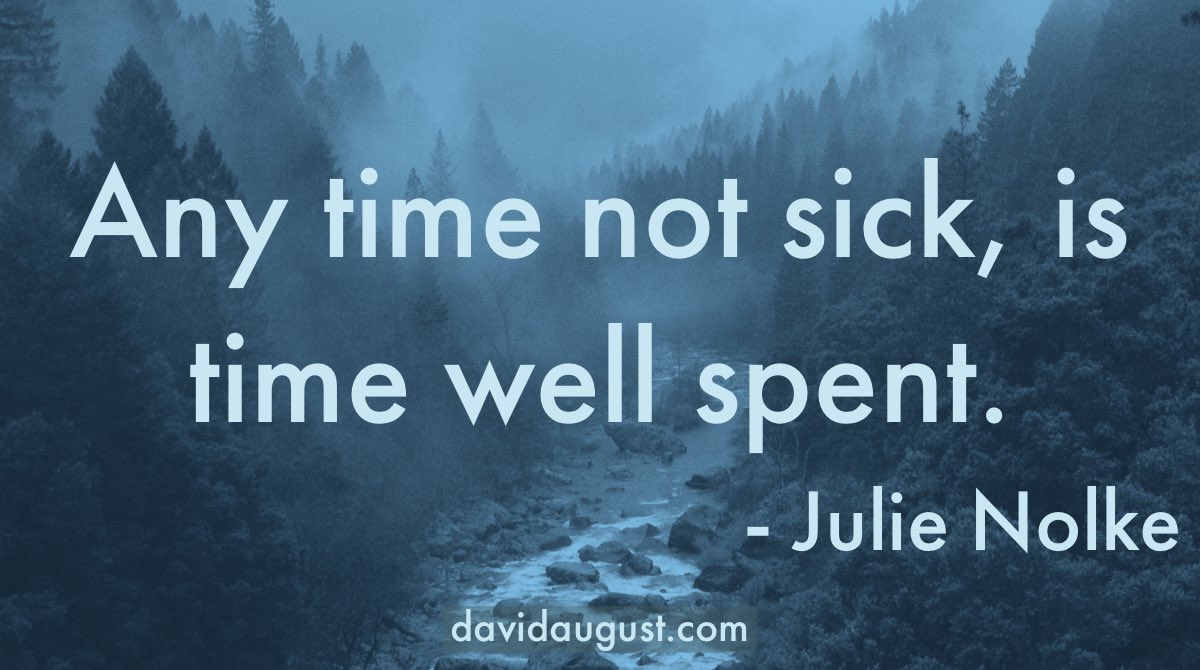
Let that sink in. Everyday you aren't sick is a good day. In a fairly objective sense we know this is true. I know it hasn't felt like that to me, but I suspect it is still true.
How could that not be true during a global catastrophe. Whatever the specifics of our individual situation, we are facing a world that's different than it was in 2019. As you may be acutely aware, our industry, both on camera and on stage, has been largely hollowed out. This isn't new, Shakespeare faced this too when the plague came to London.
But what do we do? I mean what do we do and feel we need to do now? I have felt alternately that I should be solving everything all at once, and also be content to do whatever I can each day and be ok with whatever that is.
Don't forget to be thankful for the time you have, and make use of those low moments. Feeling uncomfortable is great because it shows you all the things you can be, and what you need to be.
- David Bowie, as told to me by Joseph Dale Kelly
This does not mean you must "be productive." As Bowie says: be what you need to be. Surviving a pandemic is success. Having a pulse at the end of this is success. Have a pulse and then all your dreams can come true.
This may sound harsh, or reductionist, but couldn't it really be just that simple? Couldn't surviving a global pandemic be enough, and anything else is bonus? I think this is an uncomfortable and oddly simple truth. Thriving as we may all wish to thrive may be less possible now than at any other time in our collective lives.
This angers me, and my rage lands on the virus itself. Unfortunately, it has no face to punch, literally or metaphorically (though washing hands does help kill it). So in my distemper, what should fill my time, occupy my days?
There have been good things said about how to spend and even structure time during lock-down and quarantine, but what do we do as actors specifically? There are resources for financial relief (donate to the Actors Fund if you can, mail a donation for COVID-19 relief to The Actors Fund Home, 155–175 W Hudson Ave, Englewood NJ 07631 or visit actorsfund.org and click donate), and unemployment is also worth perusing. I am also seeking other options myself.
So step one seems to be pursuing financial relief. Step two probably can be seeking other income. This likely means seeking a non-acting job. Like anyone not doing what their career is, we are very allowed to be unhappy about it.
And there we land back on Julie Nolke's words: any time not sick is time well spent. As mentioned, having a pulse is now the bar for success and we have the gift of anything else. Seeking work that doesn't require going to set or stage isn't fun, but is worth doing anyway.
Maybe step three is to get ourselves creative sustenance. I'm not talking about paying acting work which is likely more scarce now than any other time in the last century. I'm talking about feeding our souls and using our instruments. Creative outlets now, as before, don't always require many others to participate or a hiring to happen first. We can do this without permission from anyone else. No guarantee it will always be satisfying, but it is possible.
Now may be a time we can work on a screenplay we have had on our back burner, or a play. But it's ok if we don't. Maybe we can join one of the online script readings by video chat. But we're fine if we don't. Maybe just cold read something. Or don't. There is no playbook for this or plan we have to fit. That doesn't mean we aren't pushing back against our own expectations. And one's own expectations can be oppressive.
Our own expectations do get dicey. Our own judgements often aren't particularly useful or helpful. That doesn't mean we don't have them or shouldn't have them. It does mean we are likely better served by not acting on our judgements or feeding them. Have I done all the things in an ideal world I would love to have gotten done so far during the pandemic? No. Do I gain by beating myself up for that? No. Do I beat myself up a bit anyway? Yes. It is also tempting to beat myself up for beating myself up? Also yes. I am reminded that it is worth remembering to breathe.
The Crux: the Sabre-Toothed Tiger
And here's the crux of it: many people feel uncreative right now. Many are unmotivated to work on acting things or really anything else as well. You are not alone. A metaphor I hastily came up with early on in this was that we're all trying to do everything we're trying to do with a sabre-toothed tiger in the room with us, looking on and ready to pounce. After all, there is a threat looming. Something that might hurts us and the people we love is, in a way, stalking us. This can't be comfortable. It truly cannot.
This can, all by itself, account for not being motivated. It can explain why creativity may be less accessible. And it is awful. Acknowledging the pain at least gives us some sort of handle on it even if it doesn't help it go away. Yes, Shakespeare wrote some great work during epidemics, but almost everyone else didn't. Almost everyone in the history of the world hasn't. Virtually everyone. And that does not make them any less valid of a human. If you have made anything, it's bonus. Our worth is not bound to our output. We do not earn the right to be ourselves through productivity. It is worth saying again. We do not earn the right to be ourselves through productivity.
And there's the gain we can have that Bowie name checks: this discomfort can show us all the things we can be. Yes it is awful, and the possibilities for the future are limitless. Still. These feel mutually exclusive but they aren't. It strains the mind to hold the ideas together at once: the difficulties we face now and our dreams coming true. We can survive this, and doing so is enough to achieve greatness when the threat has passed. Having a pulse at the end of this is exactly enough for us to thrive down the road. Yes, we'd like to thrive all day everyday, and often we may have been amazingly lucky to be able to. Right now, that is less possible. And that is the fault of a virus. Place the blame there, where it has been earned.
Maybe we can see things more clearly through this, even ourselves and our priorities. And maybe we can't. Either way is ok. Because simply being around tomorrow leaves us with options. So do that, and you're succeeding. Anything else is a bonus. Everything else is a bonus. Talked to a friend? That's bonus. Ate something vaguely healthy? That's bonus. Scrawled something down for a future project? Bonus. Read this paragraph aloud to check in with your cold reading and speaking of text? That's bonus too.
No two actors have the same career path. We're not lawyers, accountants or anything with a singular sequence of steps to take that lead to employment or professional development. We also get fewer road signs along the way confirming our progress is in the direction we want or that progress is happening at all. This has long been true.
But often our best work is when we, and our characters, face uncertainty with courage. And courage does not mean not being afraid. Courage does not mean knowing the outcome or forcing ourselves into some form of comfort that is known and straightforward. Courage does not mean feeling good about it and courage is not concerned with comfort. Courage is doing what we do anyway. Sometimes that thing we do is read a line, execute blocking, show up to an audition on time or play a role. Right now the "it" we have to do is have a pulse. Our task is to be. Our success is to look back on this pandemic and tell those unborn now what it was like back then. Back now.
We can act in faith or act in fear, but not both. Act in the faith that surviving now lets you thrive later. The thriving will come, as certainly as the sun will rise tomorrow. Right now, just be. And may all the time you spend be not sick and so well spent. And if you do spend time sick, may that time pass as gently as possible and return you to days well. Just be.
Labels: acting, inspiration, process
this posted by David August at 1:05 PM - 0 comments -
Saturday, May 02, 2020
As of 2025, please go to stuff.davidaugust.com, my newer blog. See you there!
Heartbreak
Heartbreak
by David August - horror/sci-fi short story

"Grandpa?" Tommy asked his grandfather, holding his hand, "why don't you want to go for a walk unless there's some wind?"
"Well, back in the first pandemic, the idea was that it could hang in the air from people breathing it out. So if there was some wind, then you could walk a good distance behind them and the wind would blow it away before you stepped through the cloud of their exhalation."
The little boy smiled a little, and felt guilty. He knew talking about the first pandemic was hard for his grandfather. But he also knew that his grandpa's eyes would light up with a twinkle he'd never see otherwise, not even when they had birthday cake or went bike riding. He was glad to get his grandfather to speak about those times, even if it sometimes made his grandfather hesitant. And Tommy felt a little bad for bringing it up. But grandpa's twinkle seemed worth it.
He'd never met his grandma, but in the stories his grandfather told of how they met, their adventures (as grandpa called them), Tommy felt like he could imagine her, moving and interactive, not just the photos and videos he could watch.
"I know it might seem a little silly," his grandfather continued, "but..."
Tommy looked back up at him as they got to the end of the driveway.
"...nothing was quite the same after that, and so I... I don't know. I guess it feels kind of nice, even if it's nostalgia, to keep some habits from then going."
"I think I can understand." Tommy was glad he hasn't seen one of them yet. The shortages, the lockdowns, the way his grandpa and the TV describe it all seems kind of scary even if old fashioned. "Do you miss it? You know, how things were?"
His grandfather paused. Tommy would realize years later it was like his grandpa was reliving it. "Yes, I do. I miss the time before. I miss the thousand little things that no one even thinks about now."
"Like what?"
"Well, there's the architecture for one."
"The architecture?"
"Yeah. They used to build stadiums and theatres and everything with people way closer together, and no screening corridors at entrances. Don't get me wrong, they are a great way to ease into the space, and they make good use of them. And who doesn't like having more personal space during a game or a show, but..."
Tommy waited, hoping he'd continue.
"There is not a great way to explain the way it is to be there now, with people just...together. Spontaneous and messy...no planning, it...it let you really enjoy it, get into it and connect with the players."
"Uh huh."
His grandfather looked him in the eye. "You could really feel it. Like at a ball game there could be a wave started, people standing up and raising their arms in unison, and following the people next to them as this whole, wave I guess, would go all the way around the stadium. You'd feel the people starting to stand near you, so even if you weren't paying attention, like you weren't watching the stands, you were looking at your food or something, you'd feel it. People try to do it now. In stadiums now you can't get that close to feel it the same way. Even at Wrigley, after the renovations it's not the same,"
Tommy knew his grandpa loved Wrigley. His grandpa and grandma had their first date there when his grandpa had been given two free tickets. That was before they'd won the last time, and before later when tickets got hard to get for in-person.
His grandpa continued, "or at a concert. I remember once on this beach, I wasn't that much older than you, this festival. It was a total free for all. I mean they had the trucks set up with speakers, and vendors and this big dinosaur thing you could just climb up and get your pictures on. And there was this one camper that was converted into a sort of bar and dance club thing, right out in the open. People dancing and trading places with a DJ who was playing the music that you could feel through the speakers, and the ground. I swear you could feel the ground moving because of all the people's feet dancing with the rhythm. Dancers just freely moving among each other."
"That's weird." Tommy had never seen that except in an old black and white movie. "People don't do that now."
"No...they don't. And for good reason."
"I know, my teachers tell us that. Tell us about how it was and can't be. That that's why we can't play with our classmates, just our brothers or sisters."
"Yeah..." grandpa fell silent and Tommy could sense it was not necessary to say something, just hold grandpa's hand while they walked.
A delivery vehicle passed by and the wind gently moved the branches of the trees.
"Grandpa?" Tommy wanted to ask, and it seemed like now was a good moment. "Do you miss grandma?"
"Yes...every moment of every day."
"How did you, do you...I don't know, how did she...how did you..."
"Well..." grandpa stopped walking and looked at Tommy. "Why do you want to know."
"Well, daddy says Wilson is getting old, and I can maybe prepare myself for when he goes." His grandpa smiled; losing your dog is hard for anyone, but especially for a little boy.
"Well, you probably can't perfectly prepare for that kind of thing. But your dad, he's a planner."
"Yeah. But he said you might be able to help me get ‘as ready as you can be.'"
"Right." His grandpa took a breath and let it out slowly. "Well, with your grandma we...I didn't have any real warning. It looked like we were out of it. We'd made it through. Vaccine was getting traction, and there was light at the end of the tunnel." Tommy saw his eyes turn wistful, like they always did when he talked about grandma. "And your grandma, she smiled, really smiled again."
Tommy tried to egg him on to keep going, "Uh huh."
"We went to the beach where we lived, well five or six blocks away, the day they opened them up. One of the last things to open up. First walk since it had started where we didn't feel like we needed to zigzag to keep away from everyone else. The sidewalks allowed two-way walking traffic then."
Tommy didn't see why they would have let that happen, it would put people passing too close to each other. "That's weird."
"Yes, it is. It was. Your grandma, she smiled when we got to the beach, and I hadn't realized how long it had been since I'd seen her really smile, her relaxed smile. You could light the world with it."
Tommy smiled. He'd seen her smile in pictures, but it was easier to see in his grandpa's eyes. "That sounds nice."
"It was. People were swimming, together, no lane markers either. And the waves and sand, the sound of kids playing. It was such a good way to celebrate being able to come outside and be with people again."
"I'll bet," said Tommy. He could hardly imagine but it all sounded very exciting.
"It was there she suggested we have your dad."
"Really?"
"Yeah. She was putting on sunscreen, and she said, totally frankly, ‘let's start a family.'"
Tommy saw his grandpa's face change. It was like storm clouds crashed into it and tears came from both eyes. Tommy had never seen this before. His grandpa's face was hollow suddenly, it was alone.
"Grandpa? You ok?" He was quiet. His eyes met Tommy's and they lit up again.
"Yes. I'm here with you."
Tommy felt good that that made his grandfather smile. "She never met me did she?"
"No. You were born a lot after she was gone. So was your dad. I'm so glad we'd frozen-"
"Popsicle Kid!" Tommy knew that well. Tommy knew that when his dad had asked his grandpa about where he came from when he was a kid, his grandpa told him and his dad had started calling himself Popsicle Kid. He'd even made his grandpa get him a cape that had PK stitched on the back so he could run around the yard like an old superhero. Tommy's dad now lets him play with it too.
"Yeah, your dad was a popsicle kid."
"So she never met dad either."
"No. She didn't. She would have really liked to."
His grandfather was quiet. The wind blew gently.
"What happened after the beach?"
"I never saw her smile, not really like that. Then..." his grandpa swallowed. "I didn't see it again until your dad was born. You and him have it."
That made Tommy feel happy inside. He was sure he would have liked to know his grandma. Could you miss someone you've never met he wondered.
"What happened after the beach?"
His grandpa paused. Breathed in and then out again.
"It mutated."
© copyright 2020 David August, all rights reserved. davidaugust.com
Labels: inspiration, process, trends
this posted by David August at 4:42 PM - 0 comments -
Sunday, April 26, 2020
As of 2025, please go to stuff.davidaugust.com, my newer blog. See you there!
Avocado Katz and the Battle for Mars - chapter 1
Avocado Katz and the Battle for Mars
by David August

Gullies at the Edge of Hale Crater - NASA/JPL/University of Arizona, Frederick Tubiermont/Unslpash
The First Chapter
[this was written years ago, and may or may not end up with more chapters]
Avocado Katz took a calming breath as the hiss of atmosphere filling the compartment began to be audible. The airlock light would switch from muted red to muted green in 15 seconds and then the interlocks would release. Then she could go inside and face the others.
It wasn't fair. She wanted to be like the others. To really be like them. But she wasn't. They'd been sent to colonize the red planet. She'd been sent to watch them. Of course they all thought she was like them. Just here to scrape out our species' first foothold on another world. And she was. Only it wasn't that simple.
"You see, colonization has never been a gentle process," he'd stood looking out the windows of his Palo Alto office with his coffee in his hand, like it was a brandy, eight months ago. And he continued. "The others are in it for the adventure, or the isolation, or maybe the chance to be a 'founding father' or even the money. But you, Dr. Katz, you are there to make sure we don't end up just a footnote with 'Croatoan' carved into some Mars rock."
"Croatoan sir?" She shifted uneasily as the young chief executive replied.
"Roanoke island, in North Carolina. There was a colony there, in the late 1500s. Then one day there wasn't. There were a lot of theories, DNA research and such, but the upshot is that the lost colony is a footnote. A historical curiosity." He turned to her, with greater purpose, "We're not gonna go that way. We're not going down as the first ones who tried. We're going to be the first ones who did."
"Yes sir."
"Katz, it's not just for the sake of this company, or this country, but for all of us. Humanity. We can't let this New World have attempts separated by centuries. We have to start a straight line, a timeline of humans touching it and never stepping away."
"Yes sir," and then she thought, "sir? If I may ask, why the urgency then, why now?"
He let a breath out. "What I'm about to tell you doesn't leave this room."
"Alright."
"Satellites and human intel on the ground say the Russians are arming their expedition."
"Arming?" she almost whispered, the familiar feeling she hadn't had in years, since back before a battle when she was in the Corps, crept into her stomach.
"Arming. They're not just going to get there 6 months after us," his eyes connected with her, underscoring the stakes, "they're going to try to wipe us out when they do."
The airlock indicator shifted green, and she willed herself to step to the door and release the latch. 2 months, they'd had 2 months on this rock alone, and she'd been sneaking time to get the system online. She was the only one who knew it was there, even if other ex-military had been staffed specifically to use it when the time came. They didn't know the weapon system was there. 4 months. They were 2 months in and in 4 months, if recent history on Earth was any indicator, they would be fighting.
The click of the helmet release in her hand took her out of the horrible calm she always felt before an engagement. Today she'd put the targeting system through its paces, and sent the data off to Earth to get it analyzed. She'd know then if they had a prayer.
About 23 minutes after she'd sent the communication, after eating and just as she was climbing into her rack to get some sleep, she wasn't sure what sort of reply would be good news. For the system to work would seem like a good thing. But there was a little voice in her chest that wanted it not to. Then maybe they could evacuate. The message indicator gently sounded. Earth had done their work fast, the long message to Earth had been returned with cool concision that made the feeling in her stomach that had started back in that office in Palo Alto grow: "Targeting systems ok."
———
"Incoming ordinance," the stern concern of the computer voice startled Avocado, "cover cover cover." Then the concussion and sound were more felt than heard. The computer was speaking again, and her heads-up overlay was highlighting in red before the dust settled and she could make out the figures it indicated, they were coming closer. "Recommend fire, recommend fire..." she almost felt the rhythm of the words before her ears adjusted and could hear the threat identification system's repeating suggestion that she shoot the people coming to kill her before they did kill her. She squeezed the trigger, rounds flew away, figures fell. Then her thigh screamed. "Auto-tourniquet engaged, seek medical help immediately." She'd only ever heard it say that phrase before failing one of the simulated missions in drills on Earth. But the dust was red. Like it was already soaked with blood. This was Mars.
She tried to feel for her leg, to assess the damage herself, with her non-gun hand. She couldn't find it. The system repeated, "urgent, get medical help now!" Then an all too human voice cut through on the coms, "my god, they're-" and a thud then a crackle. Her heads-up overlay filled with red and she made out the Russian flag on the faceless figure's gear. Then the muzzle flash blinded.
———
She jerked out of sleep, and tried to throttle the ceiling above her rack. Realizing she woke up, she smiled a hollow smile. That might have been the first nightmare on Mars. She could have done without being the one who did that first.
© 2014 David August, all rights reserved. davidaugust.com
Labels: inspiration, process
this posted by David August at 2:38 PM - 0 comments -
Sunday, March 15, 2020
As of 2025, please go to stuff.davidaugust.com, my newer blog. See you there!
Don’t Forget to Breathe
I wrote this on March 13th, posted it to Facebook and Medium; now I’m reposting it here:
Don’t forget to breathe.
The long haul truck driver who is about to drive the food/medicine/sanitizer to your local store just had to scramble to get daycare for their child because the schools closed.
The cashier at the store had to do the same, and also keeps interacting with hundreds or thousands of strangers so they will still be able to afford to pay their rent, lest they and their elderly family members end up homeless during a pandemic that preys on our elders.
The pharmacist who has dedicated their professional life to trying to get people healthy worries the shipments might not come quickly and the prescriptions might not get filled so they won’t be able to help how they’ve been trained to.
The doctor is also worried, worried that a force of nature, something so small it can’t be seen with the naked eye, something that humanity didn’t know existed 5 months ago (and may not have) may hurt their patients, take their breaths away. They can only hope science and supply chains and luck hold out long enough that triage medicine isn’t all they get to practice in the face of it in the months to come.
We are all connected. We are all charged with helping everyone around us, because we can. And we will thrive. It is what we do, even as we worry, are afraid, are surrounded by unknowns.
For thousands of years our ancestors fought against the tiny enemies that stole their children, their friends, their parents. But they fought without understanding what was inflicting harm, what took their people away. We know, and we have the lessons they learned. We are armed with so much more. We have made cousins of this scourge extinct. We will again.
We have decoded its blueprint, and right now in labs around the world, without fanfare and without rest, people you have never met and never will meet are fighting with test-tubes, and computers and sheer will. It is the will that has tamed fire, that has walked on the moon and split the atom. It is the will that snatches life from the jaws of nature’s brutality and unifies all of humanity to deny death its harvest. These people are imbued with this will inherited from a hundred millennia of our forbearers, and are working to help you, and me, and the people we love. So dear and so great is our ability to care for one another, to cherish our fellow human, to help both stranger and friend.
Wash your hands, muster your patience, find the kindness to help.
Don’t forget to breathe.
Labels: inspiration, process, trends
this posted by David August at 5:15 PM - 0 comments -
Tuesday, April 16, 2019
As of 2025, please go to stuff.davidaugust.com, my newer blog. See you there!
Being Afraid
I've read, and I believe, that we develop emotionally before we develop intellectually. We cry before we ever learn to speak. When painful things happened to us when we are children, we likely didn’t have a way of explaining the event, but we could certainly feel the emotion of fear that came with whatever messed up thing that was happening and, that was out of our control to stop. That feeling that came with that unexplained event, because we had no intellectual structure for it, might have stayed with us. It might have stayed in our body. It might have created a cycle that we will repeat until we learn to release that feeling and know that that fear has no real power over us
(from March Boldly Towards Your Fears).
Labels: inspiration, process
this posted by David August at 10:01 AM - 0 comments -
Friday, April 05, 2019
As of 2025, please go to stuff.davidaugust.com, my newer blog. See you there!
Work on Your Life
If you want to work on your art, work on your life.
- Anton Chekhov
Labels: acting, inspiration, process
this posted by David August at 4:56 AM - 0 comments -
Thursday, June 14, 2018
As of 2025, please go to stuff.davidaugust.com, my newer blog. See you there!
Holding Sides in an Audition
Some 1 in the morning thoughts about whether or not to hold your sides during a self-taped audition, or really any audition.
Worth remembering an audition is not a memorization test, and yes, it is good to be off book so the character can flow and develop. Holding sides in some people’s opinions reminds everyone that it is not a final fixed performance, and can be changed. These opinions often hold that with no sides you will be un-re-directable, and you may also be compared to a final polished performance in a finished product. Holding the sides gently instantly reminds the viewer it is an audition, even if you never look down at them.
Whatever you do, have fun: the part is yours during your audition no matter what happens later.
Labels: acting, auditions, process
this posted by David August at 1:22 AM - 0 comments -
Friday, April 27, 2018
As of 2025, please go to stuff.davidaugust.com, my newer blog. See you there!
It Is Not a Thing It Is a Process
Your relationship, your job, your career, the roles you book: none of these are static, fixed, set things like a book, a chair or a mountain are. Nor are those strictly permanent unchanging things either. They are all processes. Or if you prefer another word for them: a journey, a path, a story. Life is a process. Ongoing.
A romantic relationship may feel like a thing, and it can be tempting to think it's set-it-and-forget-it, that somehow it can reach a state of being exactly what it is now forever without modification. This is not the case. If you don't believe me, try it and you'll see how quickly stagnation will propel something to give.
So to with almost any task: you can make something fixed, unchanging, like:
- a meal worth of food,
- a presentation in an office,
- or a movie.
Once these things are made, once they cross the threshold of complete (a threshold likely placed where people find convenient or useful) they aren't the same as they were. Once
- the food is prepared to eat,
- the presentation ends,
- the movie is ready to distribute
it is different and we judge it differently; we use things and see them differently once they've "done," but they all still change. The
- food spoils or is eaten and integrated into us,
- the presentation either succeeds or fails to have the desired effect (or at least becomes less relevant as time passes),
- and the movie gets distributed or not
If a movie does get distributed, it either succeeds commercially or not in the various markets/platforms/ways it is released. A distributed movie likely evolves at some point into whether or not it will get sequels, re-releases or re-masterings and even novelizations, theme park rides and other possibilities. If a movie is not distributed relatively quickly, it may molder in a vault (physical or digital) waiting to either be forgotten, or for something outside of it to change, like the cultural currents, a performer's career arc, or something else. Then it is released and follows a new trajectory.
The point is, even though we think in the moment, we live in the now and think of stuff as fixed. It's very useful to think of them as things, they aren't: everything is changing, always.
(Note: yes, eventually the universe may even change its innate tendency toward change by going through a heat death, heat a proxy for movement/change here. This heat death sounds grim but is really just change itself changing into something else sort of [I'm wildly oversimplifying the current thinking on the cosmology of the universe which is a bit beyond what I want to focus on today]).
What does this mean for us as actors? What does this possibly too abstract and maybe rambling mean for us? Our roles, our work and our whole careers are not things, they are a process, or a bunch of processes; we are on a journey. We are following a path. Our path as actors, our character's journeys are not a thing while we are on them. Only looking back will we be able to sum them up in any way. We make sense and tell ourselves a story of what happened once it has happened, once it is "done." It might be cliché, but all we do as actors is more a path than a place.
Tempting to simply end this post with the glib "life is a journey not a destination," but there are two problems with that. One: it is boring, which is usually not a great choice for an actor. Two: it is passive. We are not simply along for a ride. We are actors. We act. Our very job title is entirely focused on us doing stuff, taking action. Whether or not the universe cooperates and complies with our desires, or gratifies our intentions with our chosen outcome, our task is about acting. Whether or not we get what we want after we do what we do, is not our responsibility.
You could think of it as above our pay grade as humans to decide entirely the outcome of anything. Results are not our problem. Results are more like things. The path leads to the results, the story leads to its end, and the journey, the process is our world. It's our focus, and where our roles, careers and lives actually happen.
We don't watch a film for just the last two seconds and the credits; when we focus on our process, or role in things, then we can make a difference. It is as I have said before: it is not our job to book, it is our job to do what we do. Focus on your process. Focus on what you can do.
Labels: acting, inspiration, process
this posted by David August at 12:28 AM - 0 comments -
Tuesday, April 03, 2018
As of 2025, please go to stuff.davidaugust.com, my newer blog. See you there!
When Things Are Broken, Act Anyway
The text of what I say in this video, in case you would rather read instead of watch and listen:
Sometimes things don't seem to be working the way that we imagined they would be if things were ideal. See, as an actor, it's very easy to use one's imagination to picture how things could be if only. And so, you can find yourself on a set that doesn't have the ability or the time to get the shot they wanted to get: so they have to make some sort of compromise. Or you can find yourself in your own life working on something and you have to compromise something, or for some other reason something's not working right. But the key is: we have to lives anyway.
See, this isn't something that just applies to acting this is something that can apply to everything you're doing. Like right now, there's the sound of a highway sort of in the background. I'm using this partly to, hopefully, make it not as easy to hear. But the point is: you're never going to actually have the ideal situation but you still have to try to do the best you can, (whether it's acting, or living, or whatever), even though things aren't going precisely the way you would have them if it were 100 percent in your control (which it never is going to be).
So basically... I'm reminded of a friend at a party. I saw this friend hearing another friend (really more of an acquaintance) sharing one of those pieces of Hollywood "conventional wisdom" that's more conventional than actually wise. And my friend, I noticed, immediately almost built a blind spot over what that person was saying. Just completely didn't give it another moment's attention. It was actually kind of inspiring, because they were hearing nonsense, something that was not useful, not constructive to hear, and they pretty much decided not to hear it. And it's made me think that sometimes:
- you may be in an audition and maybe one of the people in the audition's answering the phone (that's happened to me),
- or they're taking a lunch order,
- or eating their lunch during the audition,
- they don't seem like they're paying attention (which if you're doing a TV or film audition, they may actually watch the footage later and figure seeing it live, since they're not casting you to do a live performance isn't as important),
but whatever the case: you still need to do your work as best you can because you want to book the job. And it's not about booking the job in the audition, it's about showing them what you can do. Because if you end up on set who knows what other kind of chaos, ridiculousness, or highway noise there's going to be.
You still need to do the work that is your work to do, even if the world isn't entirely cooperating. You can even have an agent put tremendous pressure on you to book something, maybe because they're having trouble paying their bills, and your job is to go into that audition and show the people in the audition room what you do, not to actually book the work even if that's something your agent is all but insisting you do, and sometimes doing in the most unconstructive, unsupportive terms. (I mention this because many years ago I had an agent who had a habit of not insulating their talent from pressure.)
So yes, in a perfect world people configure things such that between action and cut, or between curtain up and curtain down, an actor can do their best work. But we aren't in a perfect world. So we have to try to make sure we do our best work even if the world's not cooperating. And this applies to life too: you have to try to be the best friend, the best parent, the best child, the best sibling, the best significant other, and so forth, whether or not the world is cooperating.
Because you're never gonna get this moment, this day, this year, back. The time is gonna pass anyway, and as an old mentor once said, your time is the sum total of all of your wealth.
So that is my vaguely deep insights on a Monday. And if anyone would like some acting coaching: let me know I'm taking new clients. Thanks for watching.
Labels: acting, inspiration, process
this posted by David August at 10:01 AM - 0 comments -
Tuesday, March 20, 2018
As of 2025, please go to stuff.davidaugust.com, my newer blog. See you there!
How To Self-Tape Auditions (According To a CD)
CD Billy DaMota shares his advice on self-taped auditions:
Been watching self-tapes all day...
So I thought I'd add my 2¢
Some pretty simple rules that I can see. Add more if your think they make a difference in the way self-tapes are considered.
- iPhone (anyone who spends $700+ for a camera to self-tape is a moron). And you can get an iPhone tripod for as little as five bucks on Amazon [may be closer to $15].
- Make sure your face is well-lit.
- Make sure they can hear you (avoid noisy environments).
- Wear a character-specific outfit. Homeless? Attorney? You get it.
- Framing? Depends on what your action is. Always. You can't do "chest up" framing if your action is "a chant in the lotus position" or "Elvis grinding while playing guitar."
- Follow the CDs instructions (props, direction, number of takes, how to slate, etc.).
No need to edit. Shoot it, review it, save it and send it. The only other suggestion I'd give is to state at the end of the tape or in the notes with your submission that IF they like what they see but want to redirect you, you can get them a redirected self-tape within hours. The biggest problem I run into is seeing actors who are SO good and SO close, but who need a minor tweak I know the director would like...and I can't do that with a self-tape!
What I see with most self tapes I get is that actors are thinking too much about the production value and not enough about the performance. I will always forgive you for less-than-perfect production value; you will not be forgiven for a mediocre performance.
So.
Have fun, make it your own, and if you don't like what you've recorded...do it again until you're happy.
There you have it, one casting director's take on self-taped auditons. If you'd like acting coaching for your auditions, let me know; break a leg!
Labels: auditions, process, technology
this posted by David August at 1:45 PM - 0 comments -
Thursday, November 30, 2017
As of 2025, please go to stuff.davidaugust.com, my newer blog. See you there!
Keep Working
The Muse tests you and me 24/7. She flies over and peers down on us. What she wants to see is that we are dedicated to the journey, to the process, that we are in it for the long haul and in it for keeps.
What she doesn’t want to see is that we are attached to the real-world outcome of one specific project.
The goddess hates that because it shows that we have misapprehended the nature of her alliance with us and of our apprenticeship in her service.
Keep working
(from Keep Working by Steven Pressfield).
To imagine we don't invoke the Muse in our work as actors is to both miss a crux of our task, and expose us to working habits that may not serve us. Why neglect the role of that which lies outside of us and helps infuse our work with its luster? It makes no sense. Our inspiration does not come through pure force of will. But our discipline in doing our part of our work can. I can write at length on the Source of inspiration, though won't here right now.
Just found out you didn't book the role? Do some work. Just wrapped your latest project? Get working. Feeling down? Work. Maybe it is as simple as picking up some text and starting to read it aloud. Maybe it is as sophisticated as breaking down the story for the script you're writing to give yourself material to play, and moving that script to shareable form. Maybe it is somewhere in between, like learning a new speech and getting it ready to perform as a monologue. Whatever ails you, do the work of acting. We are actors: we act.
Labels: inspiration, process, rejection
this posted by David August at 2:14 AM - 0 comments -
Tuesday, November 07, 2017
As of 2025, please go to stuff.davidaugust.com, my newer blog. See you there!
Pressure
Performing under pressure is not easy, it's a big topic and I'm only going to glancingly touch on it here and in this video. Pressure placed on us from the outside is hard enough. Like a someone on your team saying (well intentioned though it may be), Let's book this one...
(as if you were aiming to do something else), but pressure you put on yourself is a unique challenge.
Pressuring ourself, riddling your own thinking with expectations and external goals, is not always fun. The pressure, well, the call comes from inside the house so to speak. How to react, how to respond, how to do our work even when we ourselves are pressuring us to accomplish a result not within our control? The answer may be in the question: the outcome is not in our power to define, even if our work may influence it. So our focus is best used on that which we do control, on doing the work.
Let that which is outside of you be outside of you. Let that which is beyond our power to rigidly decide and control take care of itself. Wishing people and things outside ourselves would bend to our wishes may do many things, but the wish alone doesn't actually bend them. Our task, even when the stakes are high and we really really really want the gig/review/role/accolade/date is not transformed by all the distracting things our own desired outcomes manufacture. Say the words, pursue the objectives, try to make the other characters do what yours wants them to do. Simple doesn't mean easy, but focus, patience and the calm of knowing you will (n a fundamental sense) be ok no matter what happens, may help. Don't forget to breathe, and have some fun while you're at it too.
Labels: acting, auditions, process
this posted by David August at 10:00 AM - 2 comments -
Tuesday, October 17, 2017
As of 2025, please go to stuff.davidaugust.com, my newer blog. See you there!
Stillness
Sometimes "nothing" is the right thing to do as an actor, acting needs silences. Like a piece of music, with rests, our work is not all big apparent and obvious behavior. Life needs stillness too. Can you be still.
Speech matters, lines are important as is what we do. But also lines are not the be all end all of our work as actors; acting is not recitation and behavior alone. Who we are, our "being" is involved.
Sometimes the right move is not to move. I don't mean just freeze, but on camera just thinking a thought, or feeling a feeling, can be captured by the mics and lenses; the impassive machines will see and hear the things in front of them dispassionately, and we can trust that. We don't always have to feed them; we as actors don't have to exert effort to make ourselves be witnessed between action and cut, to make glass and diaphragms do their task.
I coach actors (please let me know if I can help you) and sometimes our task includes finding how to help the actor let all the externals, the extrinsic motivation (I want the part, I want my work to be well received, I want them to like me, etc.) go, and simply focus. Not always easy to do this, and even more challenging depending how your day/week/month is going. Faith that it will be ok can help. Sometimes it is breathing. Sometimes something else. And sometimes there is not a special tactic, or secret move to make. Sometimes existing is the right thing, the only thing, the main thing.
So breathe, relax, and let a moment happen. Not every instant works because we exert our will on it. In life and work, being engaged with right now, and open to the world, is often the best course to follow.
this posted by David August at 10:00 AM - 0 comments -
Tuesday, October 10, 2017
As of 2025, please go to stuff.davidaugust.com, my newer blog. See you there!
Acting with Uncertainty
Feeling that we know exactly what is perfect to do as an actor may be a first clue we are missing the mark.
It is worth noting: our work as actors is always meant to have an infusion of doubt, or uncertainty. Those aren't the right words for it, but total control and design is not quite what we're ever meant to do; facing uncertainty with courage has even been called our main task, and with good technique brought to bear we do have more options. That good technique can mean greater mastery of our instrument, but it shoudn't be a substitute for the immediacy of the moment. Work well, have fun; good luck.
this posted by David August at 10:00 AM - 0 comments -
Thursday, March 23, 2017
As of 2025, please go to stuff.davidaugust.com, my newer blog. See you there!
Study Your Lines and Be Able to Fast
Peter O'Toole is right about studying lines, and further:
Only when you can say your lines without thinking, almost in your sleep, can you then move past that "mechanical" stage and really ACT. That's what happens when the lines pop naturally into your head as you think and pursue your needs and desire onstage [or on screen], while focusing completely on who you're sharing that stage [or screen] with.
This is what young student actors who think that they can learn their lines at the last minute, and still act well and truly, don't understand until after they've had some years of experience. They think if they know the lines too far in advance they'll become "stale," they'll "peak too early." If you're a true artist, you can't "peak too early" because you know that you can never "peak." You're climbing that mountain from your first read-through of the play on through your final performance - your last "rehearsal" that you share with onlookers.
It's what separates the pros from the amateurs.
(by David Montee, and thanks to my friend Emily Randa for bringing these to my attention).
We know our lines must become natural, usually to the point of not feeling written. A messenger in Shakespeare reading a message is one example where they do not need to feel unwritten, but otherwise our words are meant to feel spontaneous. Hard to imagine doing that without knowing them inside and out, without being a bit more than off book. Thus study, not merely learning.
Our work is not a memorization test; we do more than just recite. Yet, sometimes we are handed lines moments before they must be delivered. There is a story that on the set of Gone with the Wind: sometimes script pages were being rushed from a trailer to set as the shots were being set up. We can't always bask in a lot of time to prepare. Is something lost when we are rushed, possibly. Is being rushed always avoidable, probably not.
To find faster methods of study is one of our tasks. Our working methods must be able to scale in time, as the needs of each project dictate, or even as each moment we are playing demands. At the risk of being to self promoting, I can help you to hone and increase your ways of doing this, and there are many memory techniques (for acting coaching, let me know how I can help). Perhaps we rehearse a fight sequence to be in an open space, and the production loses or changes locations: now it's in a hallway. All the better that you and your scene partners know the fight cold and can adapt moves and spacing. Maybe it's opening night and the playwright re-wrote the entire last third of the play. While it is stronger now, a speed through backstage is all the cast has now before curtain. Either of these scenarios is not ideal, but they have happened and, as other time compression has, they will happen again.
We must face uncertainty with courage in our work, and one of our few defenses against how disorienting and stressful this can be is preparation. Absorbing our lines can be key. I'll finish with an adaptation of what I think started as something the US Marines say, it came to me from a 2nd 2nd assistant director friend and used "planning" instead of "preparation":
The 6 P's of Production: Proper preparation prevents piss poor product.
this posted by David August at 1:18 PM - 0 comments -
Wednesday, February 01, 2017
As of 2025, please go to stuff.davidaugust.com, my newer blog. See you there!
Bryan Cranston's Advice On Auditioning
You're not going there to get a job, you're going there to present what you do.
-Bryan Cranston interviewed at the Oscars
We come, we act, we leave. That is the base template of our work. Casting often factors in and depends on things completely beyond your control and outside your knowledge.
Stay in your lane and run your race; auditions are our chance to do our work, and show it to others. Let them worry about who books.
And I realize how impossible that seems. Our bills getting paid, and our career's growth seems to be wrapped up in who books. I get that it feels like it, but the reality is our success is more tied to how much we turn our focus away from such extrinsic motivation when we do our work, between action and cut and curtain up and curtain down.
Booking is not about us. We do not control that outcome (unless we're the executive producer as well). So when we audition it may as well not exist to us. Do your work, and then go to the beach or something (says the guy who wishes he were at the beach today).
this posted by David August at 7:04 PM - 0 comments -
Thursday, January 26, 2017
As of 2025, please go to stuff.davidaugust.com, my newer blog. See you there!
James Cagney on Directors
Direction, I've always held, is implicit in the writing. One doesn't go to the post with a bad script if he can help it. If the script is right, the direction is all there, implicit in the writing. Consequently, whenever I hear much ranting and roaring about this, that, or the other great director, I will admit there are some directors who are imaginative, who can get the most out of their material. Hawks, Wellman, Walsh, Keighley, Curtiz, Del Ruth, Ford and others were all expert and did their job to the fullest. But many directors are just pedestrian workmen, mechanics. Ostensibly they choose camera angels and on occasion they do, but I've often seen cameramen take over when needed. The director would indicate where he wanted it, and quietly the cameraman would indicate to his assistant a spot one good foot off the director's mark. Then the cameraman would turn to me, wink, and walk away.
(from Cagney by Cagney).
Labels: inspiration, process
this posted by David August at 5:12 PM - 0 comments -
Thursday, January 12, 2017
As of 2025, please go to stuff.davidaugust.com, my newer blog. See you there!
Dessert First
You don't have a minute. You don't even really have a few seconds. Whatever work you're doing likely only has a moment of the-person-watching-it's attention before they stop paying attention, stop watching, stop listening. Maybe they change the channel, maybe they click their mouse on something else, maybe they start thinking what will they tell their assistant to order them for lunch or look at their notes from a different actor's audition earlier in the day. (And while it has been said that actors have won roles with their walk from the wings to center stage [I believe I read that somewhere in Joanna Merlin and Harold Prince's book Auditioning], confidence and the projection of it is probably best covered in another post. I am talking here about our performances themselves.)
Sure if the audience is in a theatre, watching a play or a movie, then they've probably signed up, committed, to seeing the whole thing, but even then:
Acting is merely the art of keeping a large group of people from coughing
(Sir Ralph Richardson quoted in New York Herald Tribune, May 19, 1946).
What are we to do then as actors? Well if you have any say over a script or an edit, when you can put the good stuff, the one part you'd want someone to see if they only saw one part, at the beginning. And don't save the part you love, the deeper part, the clearer work or whatever it is that excites you for some amorphous time near the climax of the story. You don't always have to make the climax happen, that's more the writer's task.
Instead, perhaps start knowing that it is coming. I'm not saving over act. I'm also not delving into a discussion of if the actor's job includes foreshadowing the story throughout act 1 in all cases (which may make for a good post at some point). I am saying don't save the good stuff for a later that may never come. If the audience leaves, or stops watching, your good work may as well have been rehearsal.
Don't assume you get 5 minutes for the YouTube sketch to get to its punchline/good part; an estimated 500 hours of new video is uploaded every minute to YouTube and will show up right next to your work. Don't guess people will watch past the first 4 minutes of the 20 episode Netflix series you're working on; win over the viewer fast or the viewer will choose something else like either what Netflix is spending $6 billion (with a 'b') this year to make themselves or spending additional money to license from other places and putting a mouse click away from your work.
Narratively you cannot, a likely should not, try to put the climax at the top if it doesn't fit. Yet even in Chekhov's Three Sisters, a play partly about stagnation, he opens with the line it's a year ago that Father died, May fifth, on your birthday, Irina.
We know and can have feelings about much of what is going on: the speaker is one of the sisters, another one of her sisters is Irina and its her birthday which is a complicated anniversary since its shared with their dad's death. It took me more words to type than Olga uses and her words likely still engage an audience interested in experiencing a family drama, just as they have for over 115 years on stage and on screen. This script lets an audience immediately get family drama, the treat they want if they are interested in a family story. The performer speaking that line ideally will be speaking already as Olga, not waiting to warm up into it even if the audience already agreed to sit through the whole show; the performer serves dessert first.
Rob Long articulated this idea of Dessert First over 5 years ago and his words still ring true:
The audience won't wait. They're hungry now...when you're trying to get people to do something, or to pay attention to something, or to just sit still for a moment, don't serve them appetizers first. Serve them dessert; dessert first, fun stuff first, sweet stuff up front. Start passing out the treats the moment it starts. Ask yourself, if you're a writer [or an actor], "at the top of the show, the top of the scene, is the audience getting dessert first?" Because if they're not, someone, somewhere...is serving it up a thumb push away
(from Martini Shot: Dessert First on KCRW, November 9, 2011).
this posted by David August at 7:34 PM - 0 comments -
Thursday, October 06, 2016
As of 2025, please go to stuff.davidaugust.com, my newer blog. See you there!
Let's Make a Content!
The world has embraced the word "Content" for much of what we make. But that puts so much emphasis on the container and so much less on the things contained. I am starting to use the word "material" more to myself, to clarify that what we make has value and worth even separated from the container it comes in.
"Material" can be made into stuff. "Content" is bland and emotionally agnostic. My friend Shariq Siddiqui (with whom a conversation today inspired me to actually write out this post, a post that had been tumbling around in my mind for a while now) said, people don't wanna pay for content (even if they'll pay for anything around it). Material makes it sound like...well...material!
Maybe we start thinking of our film and TV work as more like material making its way through a digital mill towards the audience. And think of it less like some blank feature-less chunk of content being digitally shipped in uniform shipping-container-like units toward the viewer or user.
But "the medium is the message" rings true in so many instances, so no matter what's said, we all notice the way and place it is being said. But, I connect with the character more than the logos at the start of the show or movie, and I think you do too. That is how we all want it. That is how we expect it to be.
I'm suggesting we don't get bogged down in focusing on the "container," the "pipes," the "screen," or, heaven forbid, the "bucket," and lose sight of the reason those things exist. They were created in the first place to serve content, both to be of service to it and to deliver it. Stories of human life need to be kept somewhere. The people and the stories can live without the containers (ex: live stage performance), but the containers and outlets kind of become pointless without the people and stories.
Not sure we'll find ourselves calling a friend and saying: "let's make a great content!" But whatever we call it, let's make some great things.
Labels: inspiration, process, technology
this posted by David August at 5:33 PM - 0 comments -


